Fix P1454: EVAP System Leak (Tank Side) – Trust iCarsoft CR MAX BT for Detection & Clearing
You finish refueling and notice the Check Engine Light flickers on—no strange noises, no power loss, but that warning light won’t go away. A diagnostic scan reveals P1454, a code tied to your vehicle’s Evaporative Emissions (EVAP) system. Defined as “Evaporative Emission Control System Leak Detected (Tank Side),” P1454 signals that the Engine Control Module (ECM) has found a leak in the EVAP system’s fuel tank-related components—critical for trapping fuel vapors and preventing them from escaping into the atmosphere. Ignoring it can lead to failed emissions tests, reduced fuel efficiency, and even damage to the fuel tank pressure sensor. But with the iCarsoft CR MAX BT, you can diagnose, troubleshoot, and fix this issue like a pro—whether you’re a DIY enthusiast or a professional mechanic.
The EVAP system’s “tank side” includes the fuel tank, fuel cap, tank pressure sensor, carbon canister, and connecting hoses. It works by storing fuel vapors in the carbon canister and releasing them to the engine for combustion when conditions are right. When a leak occurs (e.g., cracked hose, loose gas cap, faulty sensor), the ECM detects abnormal pressure changes and triggers P1454. Unlike P0442 (small EVAP leak) or P0455 (large leak), P1454 specifically narrows the issue to the tank-side components—simplifying diagnosis with the right tool. Let’s break down everything you need to know about P1454 and how the CR MAX BT simplifies resolution.
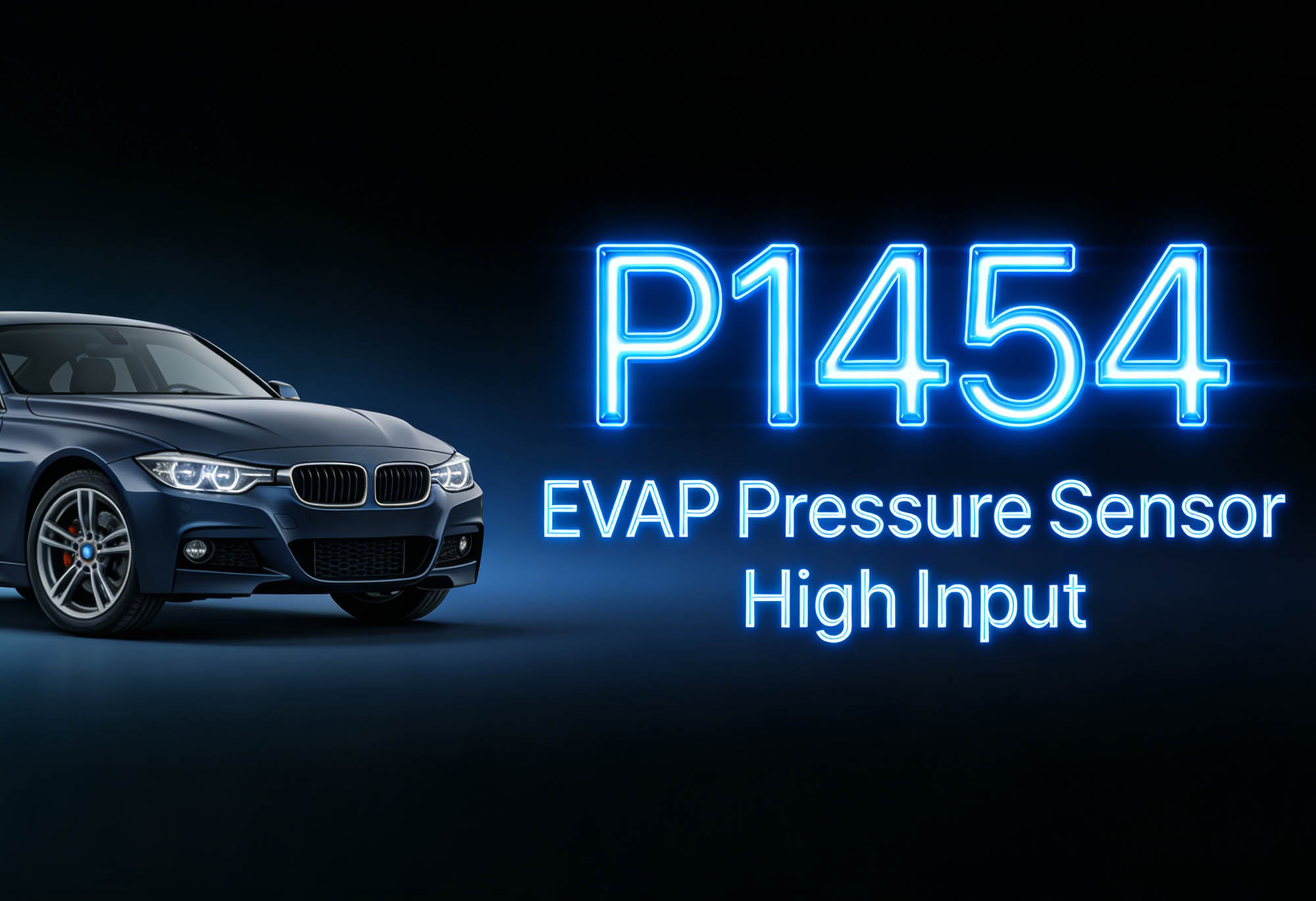 iCarsoft CR MAX BT monitoring EVAP tank pressure to diagnose P1454 evaporative emissions leaks
What Exactly Is the P1454 Code?
P1454 focuses on EVAP system leaks in the tank-side circuit, activating when the ECM runs its built-in EVAP self-tests (usually after refueling or highway driving) and detects pressure that doesn’t hold as expected. The “tank side” refers to components between the fuel tank and the carbon canister—including the tank pressure sensor, vent valve, and vapor hoses. Unlike generic EVAP leak codes, P1454 eliminates guesswork about where the leak lies, making targeted repairs easier.
P1454 is common in most modern vehicles (1996+) and has make/model-specific trends tied to EVAP system design:
-
Ford F-150 P1454: Often linked to a loose or faulty fuel cap or a cracked tank vent hose (common in 2015–2023 models).
-
Honda Civic P1454: Typically caused by a failed fuel tank pressure sensor or a clogged carbon canister (prevalent in 2016–2023 CVT models).
-
Chevrolet Silverado P1454: Frequently stems from a leaking EVAP vent valve or a damaged tank pressure sensor wiring (common in 2014–2022 models).
-
Toyota Camry P1454: Often due to a cracked fuel tank vapor line or a malfunctioning carbon canister purge valve (prevalent in 2018–2023 hybrid variants).
The iCarsoft CR MAX BT uses Auto VIN technology to pull your vehicle’s exact EVAP tank-side specs—including pressure thresholds, hose diameters, and sensor voltage requirements—eliminating guesswork and ensuring targeted diagnostics.
Key Symptoms of P1454 to Watch For
P1454 primarily affects emissions, so symptoms are often subtle—but ignoring them leads to bigger issues. Be alert for these critical warning signs:
-
Illuminated Check Engine Light: The most consistent indicator—may be paired with “EVAP System Leak” messages on newer vehicles.
-
Failed Emissions Test: High hydrocarbon (HC) emissions from unburned fuel vapors will cause non-compliance with EPA Tier 3, CARB, or Euro 6 standards.
-
Reduced Fuel Efficiency: A leak disrupts the EVAP system’s vapor recovery, increasing fuel consumption by 5–8%.
-
Fuel Odor Near the Gas Tank: Escaping vapors create a faint gasoline smell—especially noticeable after refueling.
-
Carbon Canister Overload: Long-term leaks can saturate the canister with fuel, leading to a strong gasoline smell from the rear of the vehicle.
-
Hard Starting After Refueling: Trapped air from a leak can disrupt fuel pressure, making it harder for the engine to start post-refueling.
-
Erratic Fuel Gauge Readings (Rare): A severe tank-side leak may interfere with the fuel level sensor, causing incorrect gauge readings.
Common Causes of P1454 (And How CR MAX BT Identifies Them)
P1454 has five primary causes, and the CR MAX BT’s advanced EVAP diagnostics help you pinpoint which one is affecting your vehicle—no need for expensive smoke machines:
|
Cause
|
Description
|
|
Loose/Faulty Fuel Cap
|
A worn or unlatched cap fails to seal the fuel tank. The CR MAX BT’s fuel cap pressure test checks if the cap holds vacuum/pressure to OEM standards.
|
|
Cracked/Disconnected Tank Vapor Hoses
|
Age, vibration, or impact damages hoses between the tank and carbon canister. The CR MAX BT’s EVAP leak detection test uses pressure to identify leaks in tank-side lines.
|
|
Malfunctioning Fuel Tank Pressure Sensor
|
The sensor sends incorrect pressure data to the ECM. The CR MAX BT’s sensor accuracy test compares voltage readings to expected pressure values.
|
|
Leaking EVAP Vent Valve
|
A stuck-open valve allows fuel vapors to escape. The CR MAX BT’s vent valve activation test checks if the valve seals properly during pressure tests.
|
|
Clogged/Contaminated Carbon Canister
|
A saturated canister causes pressure buildup, leading to leaks. The CR MAX BT’s canister pressure test measures backpressure to identify clogs.
|
Why iCarsoft CR MAX BT Is the Best Tool for P1454
Basic code readers only confirm P1454 is present—they can’t locate tank-side leaks or test EVAP components. The CR MAX BT offers industry-leading EVAP diagnostics with these exclusive features:
Precision EVAP Leak Detection
Uses low-pressure inflation to find leaks as small as 0.02 inches (0.5 mm) in tank-side components—no smoke machine required.
Fuel Cap Pressure Testing
Verifies if the fuel cap seals properly by applying vacuum/pressure—eliminates the #1 cause of P1454 (loose/faulty caps) in seconds.
Bi-Directional Vent Valve Control
Activate/deactivate the EVAP vent valve remotely to test sealing—listen for a click and monitor pressure changes in real time.
Live EVAP Pressure Monitoring
Track tank pressure and sensor voltage with graphing—spot rapid pressure drops that indicate leaks or faulty sensors.
Carbon Canister Backpressure Test
Measures canister backpressure to identify clogs—prevents unnecessary canister replacements and ensures proper vapor flow.
One-Key ECM Firmware Updates
Fix software glitches causing false P1454 codes with free Wi-Fi updates—includes new EVAP system algorithms for 2024+ vehicles.
Step-by-Step: Diagnose & Fix P1454 with iCarsoft CR MAX BT
-
1. Confirm P1454 & Inspect Basic Components
1. Plug the CR MAX BT’s OBD-II adapter into your vehicle’s port and pair via Bluetooth (connects in 10 seconds).
2. Select Auto VIN Identify to pull your vehicle’s EVAP tank-side specs, then navigate to Engine > Fault Codes > Read Codes to confirm P1454.
3. Tap Code Details for insights—e.g., "Honda Civic: P1454 EVAP Tank Leak; Current Pressure: 0 psi (Expected: 0.8 psi); Check Fuel Cap/Sensor."
-
2. Test the Fuel Cap First (Most Common Cause)
1. Ensure the fuel cap is tight (twist until it clicks 3–5 times).
2. Navigate to Engine > Special Functions > EVAP > Fuel Cap Pressure Test.
3. The CR MAX BT applies vacuum to the tank—"Pressure Drop Detected" = replace cap; "Stable Pressure" = cap is good.
-
3. Monitor Live EVAP Tank Pressure Data
Start the engine from cold (8+ hours off) and let it idle for 5 minutes. Drive at 40–50 mph for 10 minutes, then go to Engine > Live Data > EVAP System > Tank Side and monitor:
- Tank Pressure: Should hold 0.5–1.5 psi (gasoline) or -0.5 to -1 psi (hybrids). Rapid drop = leak.
- Sensor Voltage: Should fluctuate with pressure (0.8V = low, 2.5V = normal). Flatline = faulty sensor.
- Vent Valve Status: Should show "Closed" during leak tests—"Open" = faulty valve.
-
4. Run EVAP Leak Detection Test
1. Go to Engine > Special Functions > EVAP > Leak Detection Test.
2. The CR MAX BT inflates the tank-side circuit with low pressure and monitors for 5 minutes.
3. "Pressure Loss Detected" = leak in hoses/valve; "Stable Pressure" = no leak (check sensor/canister).
-
5. Test EVAP Vent Valve Functionality
1. Navigate to Engine > Special Functions > EVAP > Vent Valve Activation Test.
2. Follow prompts to open/close the valve—listen for a click and check pressure changes.
3. "No Pressure Shift" = faulty valve or wiring; "Pressure Change Detected" = valve is working.
-
6. Check Carbon Canister Backpressure
1. Go to Engine > Special Functions > EVAP > Canister Pressure Test.
2. The CR MAX BT measures backpressure—"High Pressure (>1 psi)" = clogged canister; "Normal (0–0.5 psi)" = canister is good.
-
7. Repair & Validate the Fix
1. Address the root cause based on test results:
- Loose/Faulty Cap: Replace with OEM cap (test with CR MAX BT).
- Cracked Hoses: Replace damaged lines or reattach loose connections.
- Faulty Sensor: Replace tank pressure sensor and calibrate with CR MAX BT.
- Leaking Valve: Replace EVAP vent valve (test activation post-repair).
- Clogged Canister: Replace carbon canister (located near fuel tank).
2. Clear P1454 via Engine > Fault Codes > Clear Codes.
3. Test drive 100–150 miles (include refueling stops) to activate EVAP self-tests.
4. Re-scan with CR MAX BT—stable pressure and no codes confirm the fix.
FAQs: Your P1454 Questions Answered
Q: Is it safe to drive with P1454?
A: Yes—for daily commutes—since P1454 doesn’t affect engine performance or safety. However, long-term driving risks failed emissions tests, carbon canister damage (costing $300+ to replace), and increased pollution. Fix it before your next emissions check.
Q: How much does it cost to fix P1454?
A: Costs are affordable compared to other EVAP codes—here’s a breakdown:
- Fuel cap replacement: $20–$50 (DIY; $80–$150 at a shop).
- EVAP hose repair/replacement: $50–$150 (depends on hose length).
- Tank pressure sensor replacement: $100–$250 (parts + labor).
- EVAP vent valve replacement: $120–$300 (parts + labor).
- Carbon canister replacement: $200–$400 (parts + labor).
- Dealership diagnostic + repair: $400–$800.
The CR MAX BT saves $200+ by letting you diagnose the issue and handle simple fixes (like cap/hose replacement) yourself.
Q: Why does P1454 come back after I clear it?
A: You didn’t fix the root cause. For example, if you cleared the code but didn’t replace a cracked hose, the leak will reoccur. Use the CR MAX BT’s leak detection test to find hidden issues.
Q: Can a loose gas cap really cause P1454?
A: Yes—70% of P1454 cases stem from a loose, worn, or damaged fuel cap. Always check the cap first (tighten until it clicks) and use the CR MAX BT’s pressure test to confirm it seals properly.
Q: Does P1454 affect hybrid vehicles?
A: Yes—hybrid vehicles (e.g., Toyota Camry Hybrid) have EVAP systems with tank-side components. P1454 in hybrids often leads to reduced electric-gas coordination and increased fuel consumption.
Q: Will P1454 cause a failed emissions test in California?
A: Absolutely—California’s CARB standards fail any vehicle with active EVAP codes, including P1454. The state also requires EVAP readiness monitors to be complete, which P1454 will block. Fix it with the CR MAX BT before testing.
Q: Can the CR MAX BT find small leaks (e.g., pinholes in hoses) that other tools miss?
A: Yes—its precision leak detection test uses low-pressure inflation to identify leaks as small as 0.02 inches (0.5 mm), which basic scanners or smoke machines may overlook.
Q: How often should I update the CR MAX BT for P1454 fixes?
A: Update every 3 months via free Wi-Fi. New firmware includes EVAP tank-side specs for 2024+ vehicles and ECM patches that fix glitches triggering false P1454 codes (common in hybrid and turbocharged models).
Conclusion
P1454 may seem like a “minor” EVAP code, but it’s a warning sign your tank-side components are compromised—leading to failed tests and costly repairs. With the iCarsoft CR MAX BT, you have the power to identify whether the issue is a loose cap, cracked hose, or faulty sensor—then fix it quickly and affordably.
No more guessing, no more overpaying at the dealership. Invest in the CR MAX BT today, and take control of P1454—and your vehicle’s emissions compliance and fuel efficiency.