What Is Car Fault Code P1450? Diagnose & Clear It with iCarsoft CR Pro S
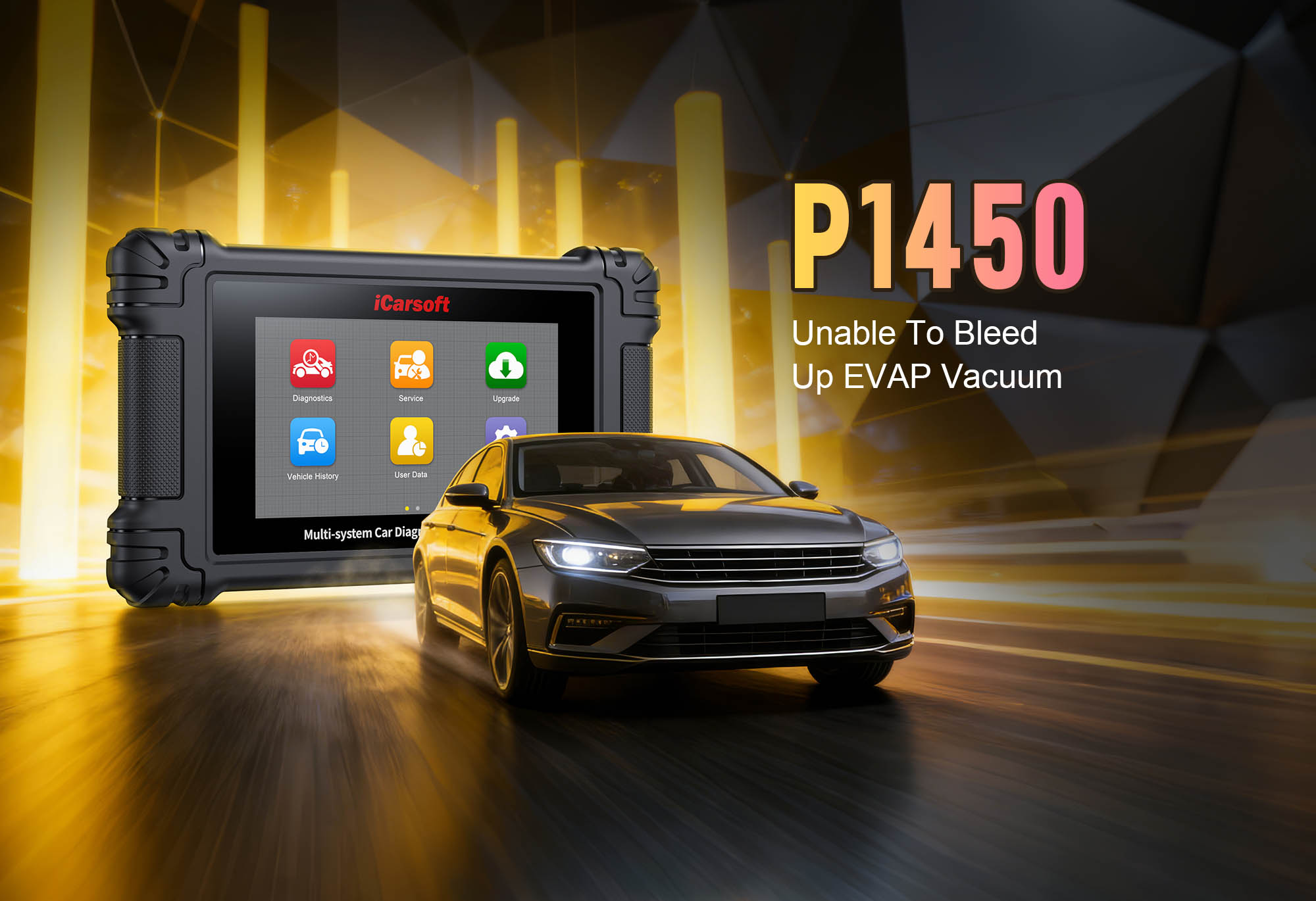
If your check engine light illuminates and your scanner pulls up P1450, you’re dealing with a common but critical emission-related issue. This code points to problems with your vehicle’s evaporative emission (EVAP) system—specifically issues with purging or venting fuel vapors, which is essential for reducing pollution and maintaining fuel efficiency. In this guide, we’ll break down what P1450 means, why it happens, and how the iCarsoft CR Pro S—your all-in-one diagnostic tool—can help you resolve it quickly, saving you time and dealership costs.
What Exactly Is Fault Code P1450?
P1450 is a manufacturer-specific OBD-II trouble code, most commonly defined as “Evaporative Emission System Purge Flow Monitor Failure” (varies slightly by make, but core issue remains EVAP system-related). The EVAP system captures fuel vapors from the gas tank and routes them to the engine for combustion, rather than releasing them into the atmosphere. When the system fails to purge these vapors properly, or when there’s a leak, blockage, or sensor malfunction, the ECU triggers P1450.
Left unaddressed, P1450 can lead to decreased fuel efficiency, failed emissions tests, and even rough idling. The good news? With the right diagnostic tool, you can pinpoint the root cause in minutes.
Why Does P1450 Happen? Common Causes
|
Cause
|
Description
|
|
Clogged or Faulty EVAP Purge Valve
|
The valve controls vapor flow—clogs or electrical failure prevent proper purging of fuel vapors from the EVAP system.
|
|
Leaking EVAP Hoses or Canister
|
Cracked hoses or a damaged charcoal canister allow fuel vapor leaks, disrupting system pressure and triggering P1450.
|
|
Faulty EVAP Vent Solenoid
|
Fails to open/close to regulate pressure in the system, leading to improper purge flow monitoring.
|
|
Malfunctioning Fuel Tank Pressure Sensor
|
Provides inaccurate pressure readings to the ECU, causing misdiagnosis of EVAP system performance.
|
|
Loose or Damaged Gas Cap
|
An improperly sealed gas cap is a common culprit—allows pressure leaks that disrupt EVAP system functionality.
|
|
Clogged EVAP Canister
|
Charcoal canister becomes saturated or blocked, inhibiting proper vapor storage and purge flow.
|
|
ECU Malfunction
|
Rarely, the engine control unit fails to interpret EVAP system signals correctly, triggering false P1450 codes.
|
Why the iCarsoft CR Pro S Is Perfect for P1450
When it comes to diagnosing and fixing P1450, the iCarsoft CR Pro S outperforms basic scanners by offering deep EVAP system insights and global compatibility. Here’s why it’s your best tool:
Full-System EVAP Scans
Goes beyond code reading—dives into the EVAP system to check purge valves, vent solenoids, and pressure sensors for precise root-cause identification.
Live Data Monitoring
View real-time fuel tank pressure, purge valve status, and solenoid activity to verify if components are working as intended.
Bi-Directional Control
Test EVAP components (e.g., activate purge valve) to confirm functionality—eliminates guesswork and unnecessary part replacements.
Global Vehicle Support
Works with over 60 makes (Ford, Toyota, Honda, BMW, Mercedes-Benz, etc.)—handles P1450 across all OBD-II compliant vehicles.
One-Click Code Clear
After fixing the issue, erase P1450 and turn off the check engine light in seconds—no additional tools needed.
Lifetime Free Updates
Stay compatible with new vehicle models and EVAP system advancements via Wi-Fi—ensures long-term utility for P1450 and other codes.
Certified Professional Feedback
Get customized repair suggestions tailored to your car’s make and model, guiding both DIYers and professionals.
Diesel & Gasoline Compatibility
Handles EVAP system issues in both fuel types with specialized diesel-related EVAP diagnostic functions.
How to Diagnose & Fix P1450 with the CR Pro S (Step-by-Step)
-
Connect the iCarsoft CR Pro S
Plug the tool into your car’s OBD-II port (typically under the dashboard) and turn on the ignition. The tool powers on automatically, ready for diagnostics.
-
AutoVIN Identify for Vehicle-Specific Data
The CR Pro S automatically detects your vehicle’s make, model, and year—no manual entry required. This ensures accurate EVAP system diagnostics tailored to your car.
-
Scan for P1450 & Related Codes
Select “Full System Scan” or “Emission System Scan” to retrieve P1450 and any associated codes (e.g., P0440 for general EVAP leaks). The tool displays code definitions for clarity.
-
Analyze Live EVAP System Data
Monitor key metrics via the live data function: fuel tank pressure (abnormal fluctuations indicate leaks) and purge valve status (non-responsive = potential valve failure). Compare readings to OEM specifications.
-
Test Components with Bi-Directional Control
Use the tool’s bi-directional control to activate the EVAP purge valve and vent solenoid. If components don’t respond, they’re likely faulty. Confirm gas cap integrity by checking pressure retention.
-
Repair the Root Cause
Based on diagnostic findings: replace a loose/damaged gas cap, repair cracked EVAP hoses, swap faulty purge valves/solenoids, or clean/clogged EVAP canisters. For ECU issues, consult professional reprogramming.
-
Clear P1450 & Reset Check Engine Light
Use the “Erase Codes” function to clear P1450 permanently. The check engine light will turn off once the root cause is resolved—no temporary resets.
-
Re-Scan & Verify System Functionality
Run a follow-up scan to ensure P1450 doesn’t return. Monitor live EVAP data during a test drive (50–100 miles) to confirm proper purge flow and pressure regulation.
FAQs About P1450 & the iCarsoft CR Pro S
Can I drive with P1450, or will it damage my vehicle?
Yes, short-term driving (to a repair location) is safe, but long-term operation leads to reduced fuel efficiency and failed emissions tests. Prolonged P1450 may contribute to rough idling—diagnose promptly with the CR Pro S.
Will the CR Pro S work with my car to diagnose P1450?
Absolutely! It supports over 60 global makes and all 1996+ OBD-II compliant vehicles—whether you drive a Ford, Toyota, Honda, BMW, or Mercedes-Benz, the CR Pro S handles P1450.
Do I need mechanical experience to use the CR Pro S for P1450?
No! The 5-inch touchscreen, AutoVIN function, and clear on-screen instructions make it user-friendly for beginners. It even highlights EVAP system components for easy reference.
Can the CR Pro S specifically identify a faulty gas cap as the cause of P1450?
Yes. It monitors fuel tank pressure—abnormal fluctuations indicate a potential cap leak. You can test the cap manually first (tighten/replace) and confirm with the tool’s pressure readings.
After fixing P1450, will the CR Pro S clear the code permanently?
Yes—once the root cause (e.g., faulty purge valve, loose cap) is fully resolved, the “Erase Codes” function clears P1450 permanently. If the code returns, the issue wasn’t addressed completely.
How is the CR Pro S better than a basic scanner for P1450?
Basic scanners only display P1450 without providing context or component testing. The CR Pro S identifies why the code occurred (e.g., leak vs. faulty valve) and lets you test EVAP components—saving you from unnecessary part replacements.
Does the CR Pro S support EVAP system tests for diesel vehicles?
Yes! P1450 and EVAP system issues occur in both gasoline and diesel vehicles, and the CR Pro S includes specialized diesel-related EVAP diagnostic functions for comprehensive coverage.
How often should I update the CR Pro S for P1450 diagnostics?
The CR Pro S offers lifetime free Wi-Fi updates—update every 3–6 months to ensure compatibility with new EVAP system designs, code definitions, and vehicle models (2024+ included).
Final Thoughts: Don’t Let P1450 Cost You Time or Money
Fault code P1450 may seem daunting, but with the iCarsoft CR Pro S, you can diagnose and fix it from your garage—no expensive dealership visits required. Its deep EVAP system coverage, live data monitoring, and bi-directional control take the guesswork out of repairs, whether you’re a DIY enthusiast or professional technician.
Invest in the iCarsoft CR Pro S today to tackle P1450 and hundreds of other emission-related codes—keep your car running clean, efficient, and compliant with emissions standards.